
ThriftyEvents Blog Guide for Smart Event Planning
blog thriftyevents.net
Planning a memorable event becomes much easier when every decision has a purpose. You do not necessarily need the most expensive venue, elaborate decorations, or an oversized catering package. What matters more is knowing where your money will have the greatest impact.
That practical idea is at the heart of blog thriftyevents.net, a resource focused on affordable event planning, budgeting ideas, DIY inspiration, and ways to organize celebrations without allowing unnecessary expenses to take over.
The ThriftyEvents website presents itself around a simple theme: plan smart, spend less, and still create an enjoyable experience. Its current content covers subjects such as event budgets, weddings, birthdays, corporate gatherings, vendor comparisons, DIY decorations, sustainable celebrations, and cost-saving approaches.
Rather than treating “budget-friendly” as another word for cheap, the useful lesson is to spend intentionally. A successful event is not the one with the biggest bill. It is the one where the budget supports the things that actually matter to the host and guests.
What Is the ThriftyEvents Blog?
The ThriftyEvents blog is an event-planning content resource connected with ThriftyEvents.net. The main website focuses on budgeting tips, DIY ideas, and general event-planning advice, while the dedicated blog at blog.thriftyevents.net publishes more detailed guides around different types of celebrations and planning decisions.
Current blog topics include building an event budget, planning affordable weddings and birthdays, comparing venues and vendors, reducing catering and rental costs, creating DIY decorations, organizing corporate events, and planning more sustainable celebrations.
That makes the resource most useful for people who want inspiration combined with practical planning guidance rather than luxury-event inspiration alone.
Who May Find It Useful?
The content can be relevant for:
- Couples planning weddings with limited budgets
- Parents organizing birthday parties
- Small businesses arranging corporate gatherings
- Community organizers planning local events
- First-time event planners
- DIY enthusiasts
- Hosts comparing venue, catering, décor, and rental options
- Anyone trying to reduce unnecessary event expenses
The advice should still be adapted to your location, event size, guest requirements, and current vendor prices.
What You Can Find on ThriftyEvents
A useful event-planning resource should help readers move from inspiration to decisions. The current ThriftyEvents content is strongest when it focuses on practical parts of that process.
| Topic | How It Can Help |
|---|---|
| Event budgeting | Organize expected costs and spending priorities |
| Weddings | Find ideas for controlling ceremony and reception costs |
| Birthday parties | Plan entertaining celebrations without excessive spending |
| Corporate events | Balance business objectives with event expenses |
| DIY décor | Reduce decoration costs through selected do-it-yourself projects |
| Vendors | Compare options beyond the headline price |
| Catering | Think about portions, packages, menus, and guest numbers |
| Venues | Evaluate cost, location, included services, and restrictions |
| Sustainability | Reduce waste while potentially lowering unnecessary purchases |
| Planning checklists | Keep deadlines, responsibilities, and bookings organized |
One of the stronger patterns visible across the blog is the emphasis on planning before spending. Its budgeting guide, for example, separates fixed and variable expenses and recommends keeping room for unexpected costs rather than treating the original estimate as guaranteed.
A Better Way to Use Event Planning Advice
Reading dozens of party ideas can actually make planning harder. Every attractive theme, decoration, entertainment option, or catering upgrade creates another possible expense.
A better method is to establish your limits before collecting ideas.
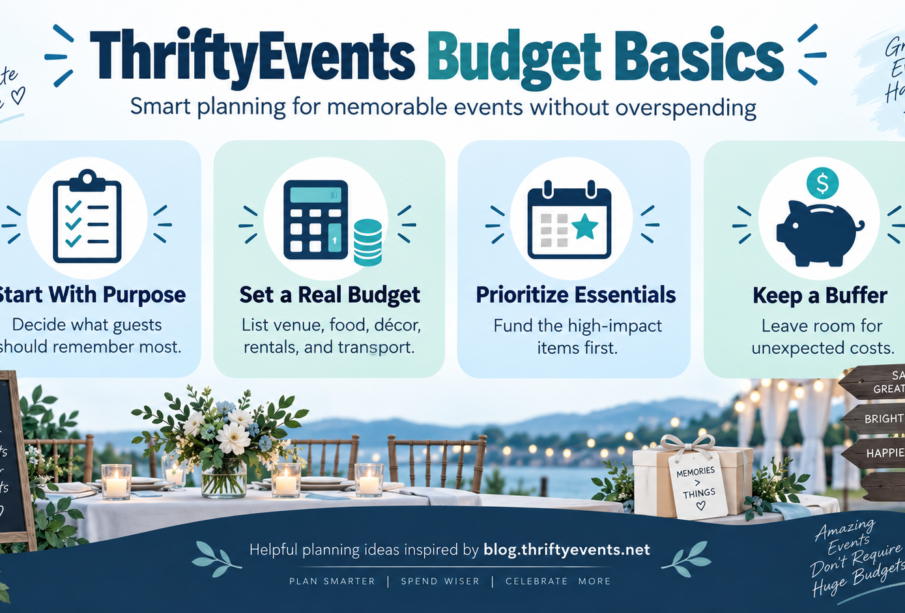
Start With the Purpose
Ask one question first:
What should guests remember about this event?
For a wedding, the answer may be the ceremony and time with family. For a birthday, it might be one memorable activity. For a business event, it could be networking, training, or a product presentation.
Once the purpose is clear, it becomes easier to reject expenses that do not support it.
Build the Budget Before Choosing Vendors
Create categories such as:
- Venue
- Food and drinks
- Rentals
- Decorations
- Photography
- Entertainment
- Invitations
- Transportation
- Staffing
- Equipment
- Permits or insurance where applicable
- Emergency or contingency spending
Then separate expenses into three groups: essential, high-impact, and optional.
Essentials receive funding first. High-impact items come next. Optional extras should only be added when enough money remains.
This approach is more useful than cutting every category equally because guests may barely notice savings in one area while strongly noticing cuts in another.
Why Budget Event Planning Does Not Mean Cheap Events
One of the biggest misconceptions around thrifty planning is that saving money automatically reduces quality.
It does not.
A lower-cost event can still feel polished when spending decisions are coordinated. A simple venue with good lighting, organized seating, appropriate music, and thoughtful food can create a better experience than an expensive location filled with disconnected extras.
Consider a birthday party.
Instead of paying separately for an expensive venue, elaborate décor, printed invitations, several entertainment activities, and a huge menu, the host might choose a simpler venue and spend more on one activity guests will genuinely enjoy.
That is not simply “cutting costs.” It is prioritization.
The same principle applies to weddings and corporate events.
Smart Ways to Control Event Costs
The practical value of blog thriftyevents.net is strongest when its ideas encourage readers to examine where money actually goes.
Here are several principles worth applying to almost any event.
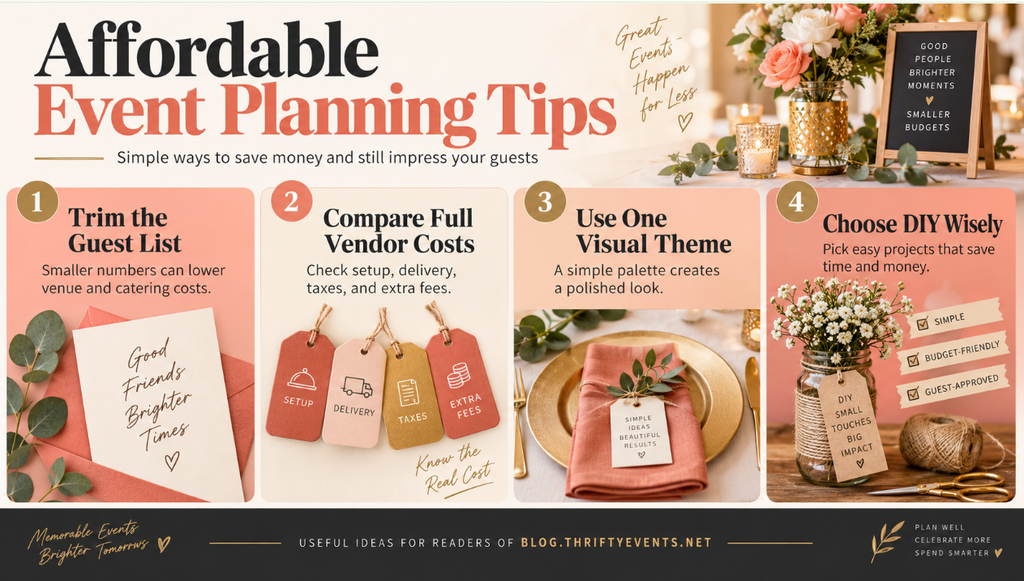
Compare the Total Vendor Cost
The lowest advertised rate is not always the cheapest final option.
Before choosing a vendor, ask what is included:
- Delivery
- Setup
- Cleanup
- Staffing
- Equipment
- Service charges
- Taxes
- Overtime
- Cancellation terms
- Deposits
A slightly more expensive package may become the better value when it includes services that another vendor charges for separately.
Control the Guest List Early
Guest numbers influence several major expenses at once.
A larger guest list can increase catering, seating, invitations, venue requirements, tableware, staffing, transport, and favors.
Before cutting small decoration costs, consider whether the guest count still matches the purpose of the event.
Choose DIY Projects Carefully
DIY can save money, but not automatically.
Materials, mistakes, tools, transport, and hours of preparation all have value. DIY works best for projects that are simple, repeatable, and realistic for the available time.
Good candidates may include basic table décor, signs, digital invitations, simple centerpieces, photo displays, or reusable decorations.
Complicated floral arrangements, electrical work, large installations, or technically demanding equipment may be better handled by experienced professionals.
Use One Visual Theme
Too many decorative ideas often create both clutter and unnecessary spending.
Choose a simple color palette and repeat a small number of materials throughout the venue.
A coordinated design usually appears more intentional than dozens of unrelated decorations.
What Makes ThriftyEvents Different From Generic Party Inspiration?
Many event websites are strongest at showing beautiful finished celebrations. That can provide inspiration, but inspiration alone does not answer practical questions such as:
How much should be allocated to each category?
Which costs are essential?
What should be compared before signing a vendor agreement?
Which decorations can realistically be made at home?
Where can an organizer simplify without harming the guest experience?
The current ThriftyEvents content attempts to address those practical decisions through budgeting guides, comparison advice, planning checklists, and occasion-specific articles.
That practical direction is more valuable than simply presenting expensive-looking event ideas without explaining how readers could realistically implement them.
What Readers Should Verify for Themselves
No event-planning blog should replace local research.
Prices can change quickly and vary enormously between cities, seasons, venues, and event types. Rules involving permits, alcohol, insurance, occupancy, accessibility, food service, noise, or public spaces may also depend on local authorities.
Before making an important booking, confirm:
- Current vendor pricing
- Taxes and service fees
- Deposit requirements
- Cancellation and refund terms
- Venue restrictions
- Insurance requirements
- Local permits
- Guest capacity
- Accessibility
- Setup and cleanup times
- Weather contingency plans
- What equipment is included
You should also distinguish editorial recommendations from verified professional, legal, financial, or safety advice.
That habit makes any planning resource more useful.
A Simple Budget-Friendly Planning Framework
You can apply the following process even before contacting your first vendor.
1. Define the Event
Write down the occasion, purpose, expected number of guests, location, and ideal date.
2. Set the Maximum Budget
Choose a genuine spending ceiling rather than an amount you expect to increase later.
3. Identify Three Priorities
Pick the three elements that matter most.
Perhaps they are food, photography, and entertainment. Everything else should support those priorities.
4. Estimate Every Major Category
Do not leave small expenses invisible. Individually they may look harmless, but collectively they can create a large budget gap.
5. Research Several Options
Compare value rather than simply choosing the first provider available.
6. Keep a Buffer
Unexpected expenses happen. Keeping some of the budget uncommitted is safer than spending every available dollar during the initial planning stage.
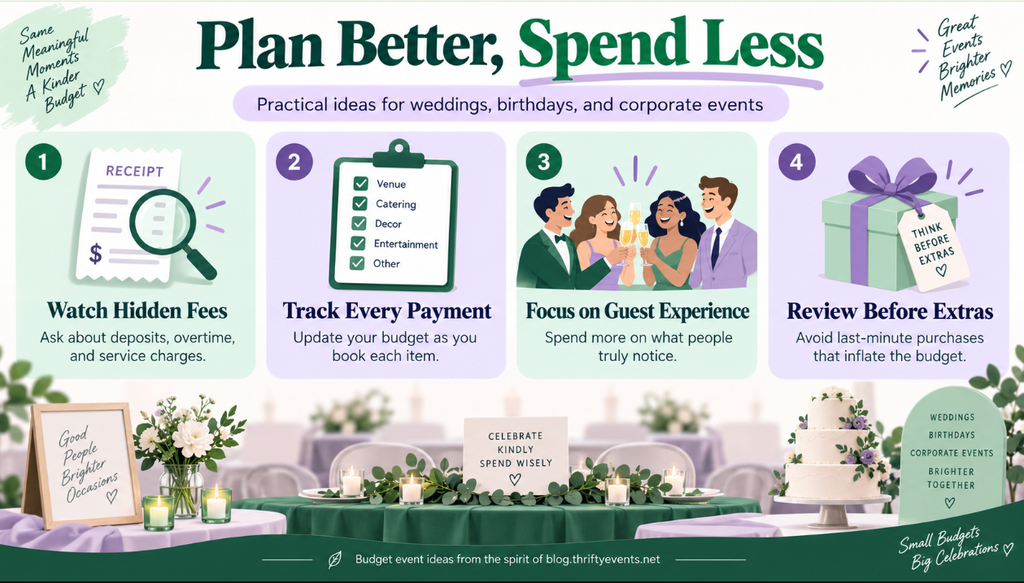
7. Track Actual Spending
Update your budget whenever you make a payment or commitment.
8. Review Before Adding Extras
Before buying another decoration or upgrade, ask whether guests will actually notice or benefit from it.
Common Event Planning Mistakes to Avoid
Even careful planners can lose control of a budget through small decisions.
One common problem is booking a venue before understanding its additional requirements. Another is comparing vendor prices without comparing what each package includes.
Other mistakes include:
- Buying decorations before choosing a theme
- Underestimating guest-related costs
- Forgetting delivery and service charges
- Taking on unrealistic DIY projects
- Making last-minute purchases
- Failing to keep written booking terms
- Spending heavily on details guests rarely notice
- Having no backup plan
Good planning is often less about finding one incredible discount and more about avoiding a series of preventable expenses.
Is ThriftyEvents Worth Reading?
For someone interested in affordable event planning, the site can be a useful source of ideas and planning frameworks. Its clearest value is its focus on budgeting, DIY concepts, practical comparisons, and different event types instead of assuming every reader has a luxury-event budget.
However, readers should treat examples as starting points rather than universal price guarantees.
Use the ideas to build questions, compare alternatives, and organize your plan. Then confirm current prices, policies, and local requirements directly with the relevant venue or service provider.
That combination of online research and real-world verification produces much better decisions.
Conclusion
Good event planning is not about spending as little as possible. It is about spending intentionally.
Blog thriftyevents.net is built around that idea, offering content on budgeting, DIY projects, weddings, birthdays, corporate events, vendor comparisons, and other practical planning topics. The strongest way to use the resource is to take its ideas as planning frameworks and adapt them to your own guest list, priorities, location, and budget.
Define what matters, compare complete costs, keep a financial buffer, and spend on the things guests will genuinely experience.
A thoughtful plan can make an event feel generous without making the budget unnecessarily large.
FAQs
What is ThriftyEvents.net mainly about?
ThriftyEvents.net focuses primarily on budget-conscious event planning. Its current website highlights event planning advice, budgeting tips, and DIY ideas, while its blog contains more detailed guides for weddings, birthdays, corporate events, vendor decisions, decorations, and related subjects.
Can ThriftyEvents help with wedding planning?
Its blog currently includes content specifically about planning weddings on a budget. Readers can use such guidance to think about priorities, spending categories, vendors, decorations, and other cost decisions, but local prices should always be verified independently.
Does the site only cover low-budget parties?
No. Its current content also includes corporate events, weddings, birthdays, vendor comparisons, sustainability, event budgeting, and general planning advice.
Are DIY decorations always cheaper?
No. DIY projects can save money when materials are affordable and the project is simple. Complicated projects can become expensive once tools, mistakes, transport, materials, and preparation time are considered.
How should I start planning an affordable event?
Begin with the event’s purpose, maximum budget, expected guest count, and three most important priorities. Estimate essential costs before adding optional decorations or upgrades.
Should I rely on online event cost estimates?
Use them as references, not guarantees. Venue rates, catering costs, taxes, labor charges, rentals, and permits vary significantly by location, date, availability, and event requirements.
For more updates visit: PostFame




4 comments
Leave a reply




The Rubik theme is the best Premium WordPress Themes that perfect for news, magazine, personal blog, etc. It’s never been easier to build a standout website.
[…] practical idea sits at the heart of blog thriftyevents.net, a resource built around planning enjoyable events while keeping unnecessary expenses under […]
[…] only on major purchases. Small expenses such as delivery charges, additional supplies, last-minute replacements, transport, or equipment can collectively have a noticeable effect on the final […]
[…] name looks technical enough to suggest an official cybersecurity classification, but there is little evidence supporting that […]
[…] safest conclusion from current public research is that the term itself is circulating online, while many of the more detailed claims remain insufficiently […]