
TheJavaSea.me AIO-TLP371 What You Need to Know
AIO-TLP371 explained with a focus on online privacy and security.
A strange leak-related keyword can create more confusion than clarity. That is exactly what has happened with thejavasea.me leaks aio-tlp371, a phrase that has appeared across search results and technology websites during 2026.
The important question, however, is not simply what the phrase sounds like. It is whether the claims surrounding it can actually be verified.
Current public coverage describes AIO-TLP371 as an archive or release-style label associated with TheJavaSea.me. However, available reporting does not independently establish the exact origin, contents, size, authenticity, or scope of the material. Several pages make stronger claims than the available evidence supports.
That distinction matters. A search result, forum listing, or repeated blog claim is not the same thing as an independently confirmed cybersecurity incident.
This guide explains what the term appears to mean, what is known, what remains uncertain, and what users should do if they are worried about their privacy or account security.
What Is the TheJavaSea.me AIO-TLP371 Leak?
The phrase thejavasea.me leaks aio-tlp371 combines a website name with an archive-style identifier.
“AIO” is commonly understood online as All-In-One, a phrase often used for a collection that combines different material into one package. “TLP371” appears to function as a label or identifier associated with the particular archive.
There is an important caveat: the available evidence does not establish that “TLP371” is an official cybersecurity classification.
The formal Traffic Light Protocol (TLP) is a legitimate information-sharing framework maintained by FIRST. Its recognized TLP 2.0 labels are TLP, TLP, TLP, and TLP. TLP371 is not an official TLP classification.
So readers should not assume that the “TLP” portion of AIO-TLP371 means a government agency, security company, or official cybersecurity body classified the material.
What the label does not prove
The identifier alone does not prove:
- who originally created or obtained the material;
- exactly when it was collected;
- how many files or records are involved;
- whether the material is authentic;
- whether the collection is complete;
- whether all descriptions attached to it are accurate;
- whether information came from one incident or several sources; or
- whether files associated with the claim are safe to download.
This is one of the most important distinctions missing from many pages currently ranking for the query.
What Has Actually Been Verified?
The safest conclusion from current public research is that the term itself is circulating online, while many of the more detailed claims remain insufficiently verified.
A number of websites published articles about AIO-TLP371 during 2026. However, some descriptions appear to repeat similar claims without providing independent technical evidence, an affected organization’s statement, a recognized breach notification, or a security advisory confirming the alleged contents.
One indexed result associated with TheJavaSea.org lists a post titled “TheJavaSea.me Leaks AIO-TLP371,” demonstrating that the phrase has been used publicly online. That establishes the existence of the topic, but it does not independently verify everything said about the underlying material.
This is why responsible reporting should use terms such as alleged, reported, and unverified when evidence is incomplete.
Why repeated claims are not proof
Search engines can return many articles discussing the same event, but ten articles do not necessarily represent ten independent sources.
For example, if one website publishes an unsupported claim and several other websites rewrite it, searchers may see a large number of pages apparently confirming the same information. In reality, they may all trace back to one unverified statement.
A useful verification process asks:
- Is there an original source?
- Is there technical evidence?
- Has an affected organization confirmed the incident?
- Is the claimed data independently analyzed?
- Are dates, record counts, and file descriptions supported?
- Are independent cybersecurity researchers reporting the same findings?
Without those checks, precise-looking numbers can create false confidence.
Why You Should Not Download Alleged Leak Archives
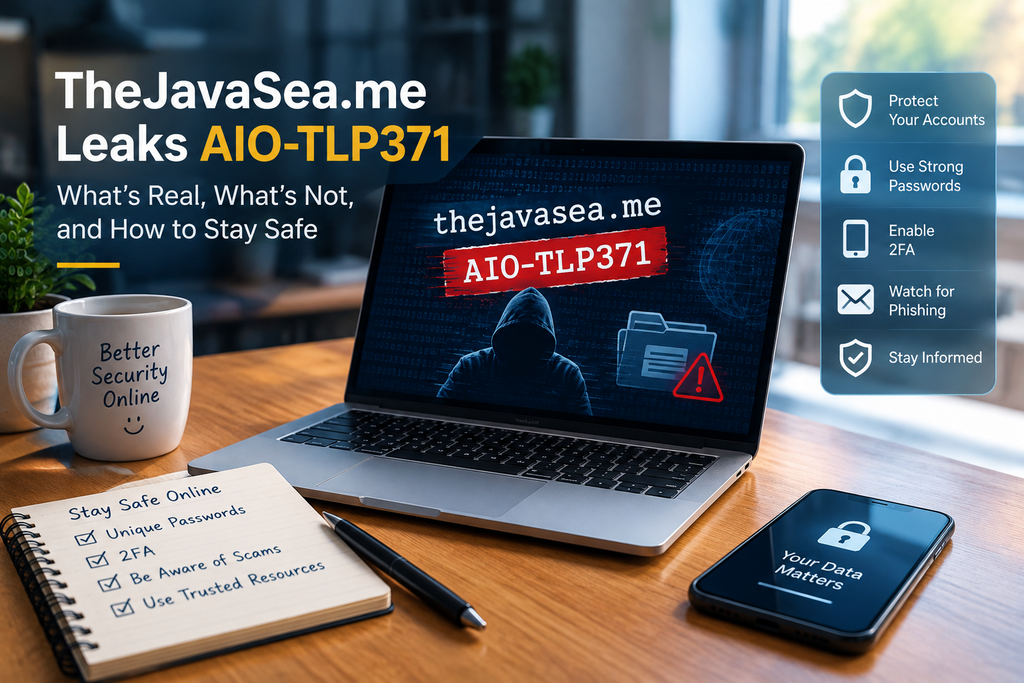
People searching for leak-related terms may be tempted to find the original files simply to see what they contain. That is a poor security strategy.
Unknown archives can contain malicious executables, scripts, compromised documents, or other files designed to steal information from the person opening them.
There is also a privacy problem. If an archive contains personal or intimate material, downloading, storing, or redistributing it can create serious ethical and potentially legal consequences.
You do not need to possess leaked material to determine whether your own accounts may be at risk.
Instead, focus on protecting the accounts and information that actually belong to you.
What Should You Do If You Are Worried About Your Data?
If your concern is personal exposure rather than curiosity about the archive, there are safer steps.
Change reused passwords
If you have used the same password across multiple websites, replace it with unique passwords. A password manager can make this much easier.
The most important accounts to protect first are usually:
- primary email;
- banking and financial accounts;
- social media;
- cloud storage;
- shopping accounts; and
- accounts containing personal information.
Turn on two-factor authentication
Two-factor authentication adds another security layer even if a password is compromised.
Where available, an authenticator app or security key can provide stronger protection than relying only on passwords.
Watch for phishing
Data exposure can lead to convincing scam messages.
Be cautious if you receive an unexpected message asking you to:
- reset a password;
- verify payment information;
- open an attachment;
- provide a verification code; or
- click a shortened or unfamiliar link.
Never give someone a one-time authentication code simply because they claim to be from a company.
Check your own exposure through legitimate services
If you believe an email address or password may have appeared in a known breach, use a reputable breach-notification or account-security service rather than visiting a leak forum.
This approach gives you useful information without requiring you to handle stolen material.
AIO-TLP371 vs. a Confirmed Data Breach
It is useful to understand the difference between a leak-related label and a confirmed breach.
| Situation | What it tells you |
|---|---|
| Search result | The topic is being indexed or discussed |
| Forum listing | A particular label or claim exists online |
| Blog article | Someone has published an interpretation |
| Security researcher analysis | Provides stronger technical evidence |
| Company confirmation | Establishes that an organization acknowledges an incident |
| Independent breach investigation | Can help verify source, scope, and affected data |
AIO-TLP371 currently belongs closer to the first part of this spectrum than the last.
That does not prove that no underlying material exists. It means the available public evidence is not strong enough to confidently state every claim made about it as fact.
Common Misunderstandings About AIO-TLP371
“TLP371 must be an official security classification.”
No. The official Traffic Light Protocol uses recognized labels such as TLP, TLP, TLP, and TLP. TLP371 is not one of those official classifications.
“A large number of websites discussing the topic confirms the leak.”
Not necessarily. Multiple websites can repeat the same original claim without independently verifying it.
“The only way to know whether my information is included is to download the archive.”
That is unnecessary and potentially dangerous. Use legitimate breach-notification and account-security resources instead.
“A precise record count means the information has been verified.”
Not by itself. Numbers should be supported by evidence from credible researchers or affected organizations.
Why Searchers Should Be Careful With Leak-Related Content
Leak-related subjects create a strong incentive for sensational headlines. A page promising an enormous database, secret files, or exclusive access can attract clicks even when the underlying evidence is weak.
Google’s current people-first guidance specifically encourages original research, useful analysis, clear sourcing, and content that adds value rather than simply rewriting what other pages say. It also warns against exaggerated titles and content created primarily to attract search traffic.
That is especially relevant to this topic.
A genuinely useful article should not pretend to know information that cannot be verified. It should tell readers what is established, what is uncertain, and what practical steps they can take.
What Google’s 2026 Search Guidance Means for This Topic
Google’s May 2026 Core Update rolled out from May 21 through June 2, 2026. Google has continued emphasizing helpful, reliable, people-first content rather than pages designed mainly to capture search traffic.
Google’s guidance for AI Search also does not call for a special collection of “AI SEO tricks.” Its current documentation says the same foundational SEO principles remain important for AI Overviews and AI Mode: useful content, technical accessibility, clear organization, and reliable information.
For a topic surrounded by uncertainty, that means accuracy matters more than simply repeating the target keyword.
A strong page should answer the reader’s immediate question, distinguish evidence from speculation, avoid sensational claims, and provide genuinely useful security advice.
The Bottom Line
The phrase thejavasea.me leaks aio-tlp371 refers to an online topic associated with an alleged archive or bundled collection connected with TheJavaSea.me.
What can be established is that the term is publicly circulating and has generated multiple articles and discussions. What cannot currently be established with sufficient independent evidence is the exact origin, authenticity, contents, scope, or completeness of the alleged AIO-TLP371 material.
The safest response is therefore not to chase the files.
If you are concerned about your own information, strengthen your passwords, enable two-factor authentication, watch for phishing, and use legitimate breach-monitoring resources. If you are researching the subject, rely on independent evidence rather than repeating claims simply because several websites make them.
In cybersecurity reporting, “not independently verified” is a useful conclusion—not a weakness.
Frequently Asked Questions
What is thejavasea.me leaks aio-tlp371?
It is a search phrase associated with TheJavaSea.me and an archive-style identifier called AIO-TLP371. Current public coverage discusses the topic, but the exact origin, contents, authenticity, and scope of the alleged material have not been independently established by reliable public evidence.
Is AIO-TLP371 an official TLP classification?
No. TLP371 is not an official Traffic Light Protocol classification. FIRST’s TLP 2.0 framework uses TLP, TLP, TLP, and TLP.
Is AIO-TLP371 a confirmed data breach?
There is not enough independent public evidence to confidently describe it as a conventional, confirmed database breach. The label is circulating online, but specific claims about its source and contents should be treated cautiously.
Does AIO-TLP371 definitely contain passwords?
That cannot be confirmed from the reliable public evidence reviewed for this article. Readers should avoid treating unsupported descriptions of the alleged archive as established facts.
Should I download the alleged files to check whether I am affected?
No. Downloading unknown leak archives can expose your device and accounts to security threats and may create privacy or legal problems. Use legitimate account-security and breach-notification services instead.
What should I do if I think my information was leaked?
Change reused passwords, use unique passwords for important accounts, enable two-factor authentication, monitor account activity, and be especially careful with unexpected password-reset or verification messages.



Leave a reply




The Rubik theme is the best Premium WordPress Themes that perfect for news, magazine, personal blog, etc. It’s never been easier to build a standout website.